
11 Plus Practice Questions (With Answers): Complete Guide for Students
Preparing for the 11+ exam can feel overwhelming, especially when you’re not sure what kind of questions to expect. Parents often ask the same thing: “What do real 11+ questions actually look like?” This guide answers that directly.
Instead of theory, you’ll find realistic 11 plus practice questions across all key subjects—maths, English, verbal reasoning, and non-verbal reasoning. More importantly, every question includes a clear explanation so your child understands how to arrive at the correct answer.
If you’re new to the process, it’s worth starting with a full breakdown of what the 11+ exam is before diving into practice. But if you’re ready to get started, the questions below are designed to mirror real exam formats.

Maths Questions

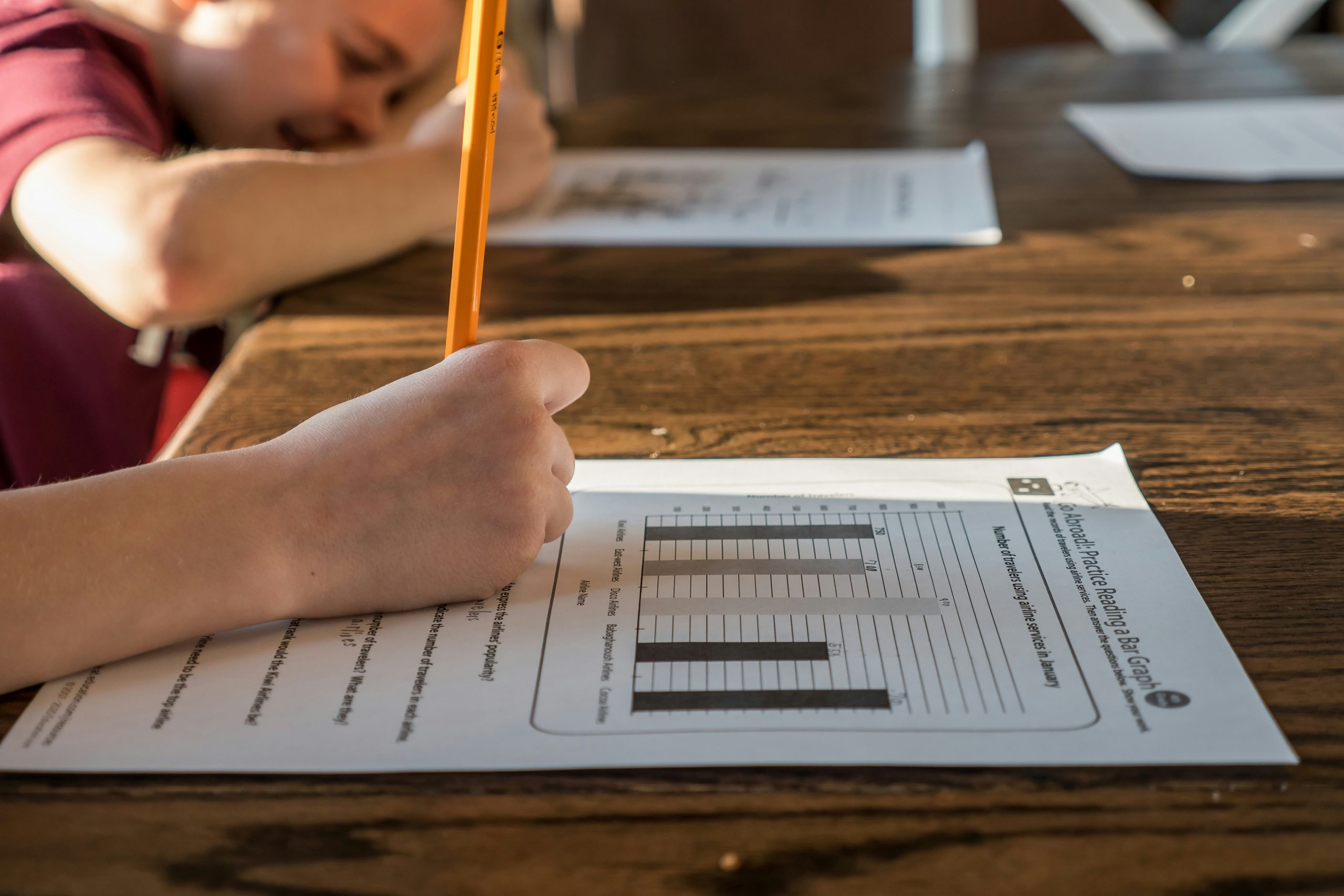
Maths in the 11+ is less about memorising formulas and more about applying them under pressure. Children are expected to interpret problems, identify the correct method quickly, and carry out accurate calculations—often within tight time limits. This means success isn’t just about knowing how to add, subtract, or calculate percentages. It’s about recognising what the question is really asking.
Many questions are framed as word problems, requiring students to extract key information before solving. Others test multi-step reasoning, where one mistake early on can affect the final answer. Time pressure adds another layer of difficulty, forcing students to balance speed with accuracy.
A strong foundation in topics like fractions, percentages, ratios, and basic algebra is essential. But just as important is developing problem-solving instincts—knowing when to estimate, when to check, and when to move on.
If your child struggles with maths questions, it’s rarely due to a lack of knowledge. More often, it’s about applying that knowledge efficiently. If you need a deeper breakdown, see our full guide on 11+ maths questions explained.
Practice Questions
Question 1
A train travels 120 miles in 2 hours. What is its average speed?
Question 2
Find 25% of 360.
Question 3
If a rectangle has a length of 12 cm and a width of 5 cm, what is its area?
Question 4
A shop reduces a £80 item by 15%. What is the new price?
Question 5
What is the next number in the sequence?
3, 6, 12, 24, ___
English Questions
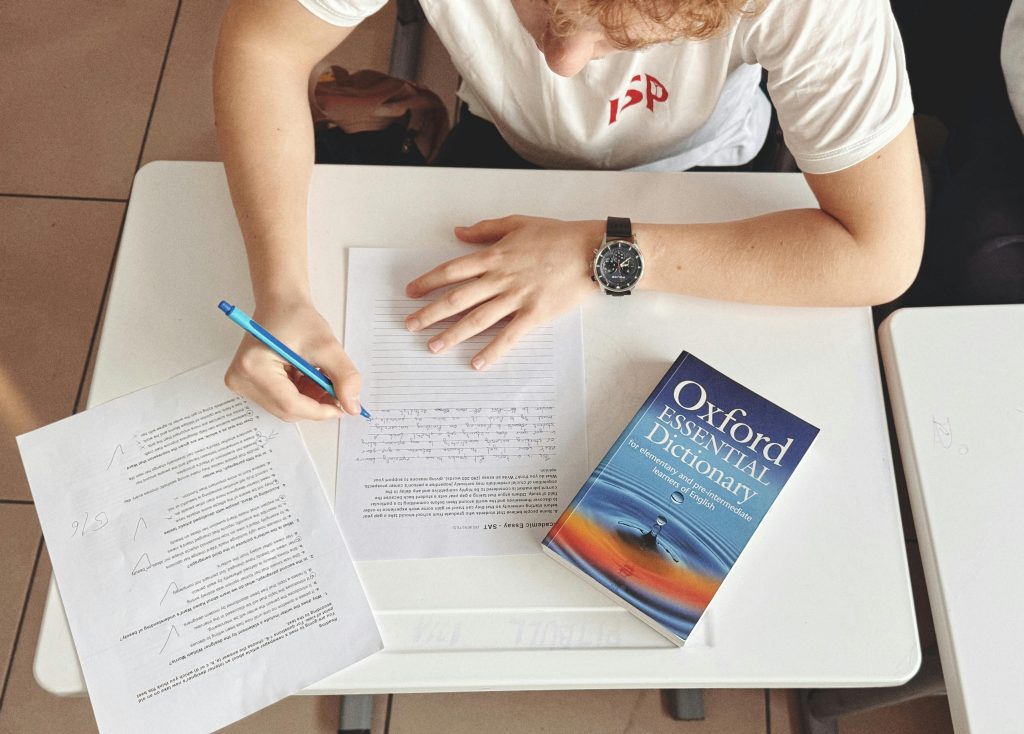
The English section goes beyond basic reading and writing. It tests how well a child can interpret meaning, understand nuance, and work with language under pressure. This is why many students find it challenging, even those who perform well in school.
Comprehension questions require more than simply locating information in a passage. Students need to infer meaning, identify tone, and explain why certain words or phrases are used. Vocabulary plays a huge role here. A strong word bank allows children to understand texts more quickly and answer questions with confidence.
Grammar and sentence structure are equally important. Small details—such as verb tense or punctuation—can make the difference between a correct and incorrect answer.
Unlike maths, where answers are often clear-cut, English requires judgement. Students must choose the “best” answer, not just a technically correct one. This makes practice essential, particularly with exposure to a wide range of question types and texts.
For a deeper dive, explore our full English preparation guide.
Practice Questions
Question 6
Choose the word closest in meaning to “reluctant”:
A) eager
B) hesitant
C) confident
D) proud
Question 7
Fill in the blank:
“She ___ to the shop before it started raining.”
A) go
B) goes
C) went
D) gone
Question 8
What is the opposite of “ancient”?
Question 9
Correct the sentence:
“He don’t like apples.”
Question 10
Read the sentence:
“The sky darkened as the storm approached.”
What mood does this create?
Verbal Reasoning Questions
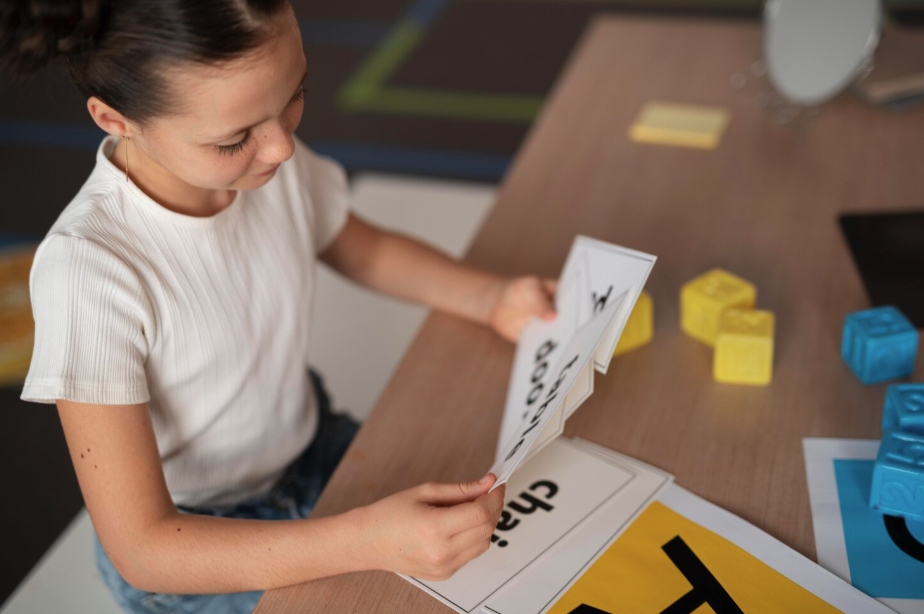
Verbal reasoning is where logic meets language. It tests how well children can recognise patterns, relationships, and rules within words, letters, and sequences. For many students, this is one of the most unfamiliar parts of the 11+—not because it’s difficult, but because it’s different.
Questions often involve codes, analogies, sequences, and classifications. Success depends on spotting patterns quickly and applying consistent rules. For example, a sequence might shift letters forward in the alphabet, reverse order, or alternate between two rules.
What makes verbal reasoning challenging is the variety. There’s no single method that works for every question. Students need to become comfortable switching between different types of logic, often within the same test.
The good news is that verbal reasoning improves significantly with practice. Once children begin to recognise common patterns, their speed and accuracy increase rapidly. This is why consistent exposure is far more effective than occasional revision.
If you want to build a strong foundation, start with our verbal reasoning techniques guide, which breaks down the most common question types and how to approach them.
Practice Questions
Question 11
Find the odd word out:
Dog, Cat, Lion, Table
Question 12
Complete the analogy:
Book is to Read as Knife is to ___
Question 13
Rearrange the letters to form a word:
“LPAEP”
Question 14
Which word does not belong?
Red, Blue, Green, Apple
Question 15
Find the missing word:
Cow is to Calf as Dog is to ___
Non-Verbal Reasoning Questions
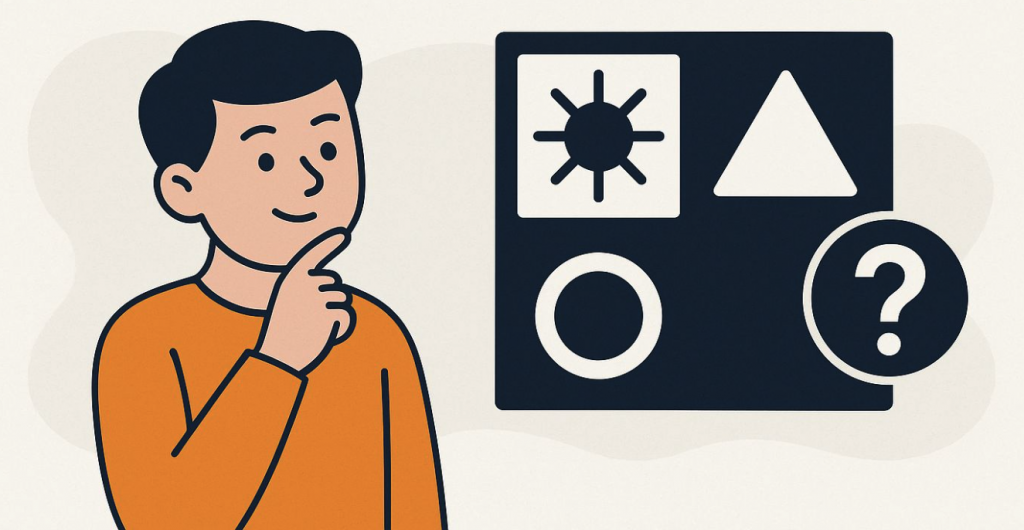
Non-verbal reasoning removes language entirely and focuses on visual logic. Instead of words or numbers, students work with shapes, patterns, rotations, and sequences. For many children, this is the most unfamiliar section—and often the most intimidating at first.
The key skill here is pattern recognition. Students must identify how shapes change from one step to the next. This could involve rotation, reflection, movement, or a combination of multiple rules. Unlike other subjects, there are no formulas to memorise. Success comes from observation and logical thinking.
Another challenge is mental visualisation. Students need to manipulate shapes in their mind—rotating them, flipping them, or breaking them down into parts. This takes practice, especially under timed conditions.
However, non-verbal reasoning is also one of the quickest areas to improve. Once children understand the common types of transformations, their confidence grows rapidly. For more examples, visit our non-verbal reasoning patterns guide.
Practice Questions
Question 16
Which shape comes next in the sequence?
▲ ■ ▲ ■ ▲ ___
Question 17
Find the odd shape out (based on rotation or symmetry).
⬜ ⬛ ⬜ ⬜
(All shapes are squares, but one differs. Which one and why?)
Question 18
Which figure completes the pattern?
Sequence:
▲ → ▶ → ▼ → ◀ → ___
(Each shape rotates 90° clockwise)
Question 19
Identify the missing part of the sequence.
Pattern:
⬤ ◯ ⬤ ◯ ⬤ ___
Question 20
Which shape is the mirror image of the given figure?
Original shape:
┌──
│
Options:
A) ──┐
│
B) ┌──
│
C) │
──┘
D) ──┐
│
Answers and Explanations
This is where real progress happens. Getting the correct answer is only part of the process. What truly improves performance is understanding how that answer was reached—and why alternative answers are wrong. Without this step, practice becomes guesswork rather than learning.
Encourage your child to slow down during review. Ask them to explain their thinking, even if they got the answer right. Could they have solved it faster? Was there a simpler method? Did they make it harder than it needed to be?
Mistakes are even more valuable. Each incorrect answer highlights a gap—whether it’s a misunderstanding, a rushed decision, or a missed detail. Identifying these patterns early prevents them from becoming habits.
Over time, this approach builds not just accuracy, but confidence. Students begin to recognise familiar question types, apply strategies more efficiently, and approach the exam with a clearer mindset.
Maths Answers
1. 60 mph
Explanation: 120 ÷ 2 = 60
2. 90
Explanation: 25% = 1/4 → 360 ÷ 4 = 90
3. 60 cm²
Explanation: Area = length × width
4. £68
Explanation: 15% of 80 = 12 → 80 – 12 = 68
5. 48
Explanation: Multiply by 2 each time
English Answers
6. B) hesitant
Explanation: “Reluctant” means unwilling or unsure
7. C) went
Explanation: Past tense required
8. Modern
Explanation: Opposite of ancient
9. He doesn’t like apples
Explanation: Subject-verb agreement
10. Tense or dramatic
Explanation: Words like “darkened” and “storm” create tension
Verbal Reasoning Answers
11. Table
Explanation: Not an animal
12. Cut
Explanation: Function analogy
13. Apple
14. Apple
Explanation: Not a colour
15. Puppy
Non-Verbal Reasoning Answers
16. ■
Explanation: The sequence alternates between triangle and square.
17. ⬛
Explanation: It is the only filled (solid) square, while the others are hollow.
18. ▲
Explanation: The triangle rotates 90° clockwise each step:
▲ → ▶ → ▼ → ◀ → ▲
19. ◯
Explanation: The pattern alternates between filled and hollow circles.
20. A
Explanation: A mirror image flips the shape horizontally. The open side switches direction while maintaining structure.
How to Use Practice Questions Effectively
Simply completing large numbers of questions won’t guarantee improvement. What matters is how those questions are used.
In the early stages, focus on understanding rather than speed. Let your child work through problems without time pressure, ensuring they grasp the method behind each answer. This builds a strong foundation and reduces anxiety.
Once confidence improves, gradually introduce timed sessions. This helps students adjust to the pace of the exam while maintaining accuracy. Start with short bursts—10 to 15 minutes—before moving to full test conditions.
Review should always be part of the process, not an afterthought. Go through mistakes together and identify patterns. Are errors happening in specific topics? Are they rushing certain question types? These insights are far more valuable than simply moving on to the next set.
For best results, combine practice questions with structured resources such as practice papers, topic-specific drills, and a realistic study timetable. This creates a balanced approach that develops both skill and exam technique.
Common Mistakes Students Make
Many students plateau during 11+ preparation—not because they lack ability, but because of habits that limit progress.
The most common mistakes include:
- Rushing through questions: Students often skim instead of fully reading. This leads to avoidable errors, even on topics they understand well.
- Focusing on answers instead of methods: Memorising answers may work short-term, but it doesn’t build the flexibility needed for new or unfamiliar questions.
- Avoiding weaker topics: Children tend to practise what they’re already good at, leaving gaps that become harder to fix over time.
- Inconsistent practice: Irregular study sessions break momentum. Progress comes from steady, focused practice—not occasional bursts.
- Not reviewing mistakes properly: Simply checking answers isn’t enough. Without understanding why something was wrong, the same mistakes repeat.
The takeaway is simple: Better practice beats more practice. Consistency, reflection, and targeted improvement will always drive stronger results.
How Many Questions Should You Practise Daily?
There’s no universal number that guarantees success, but consistency is far more important than volume.
A structured approach works best. Aim for around 10 to 20 focused questions per day, depending on your child’s level and available time. This keeps sessions manageable while maintaining steady progress.
It’s also important to vary subjects. Mixing maths, English, verbal reasoning, and non-verbal reasoning prevents fatigue and keeps engagement high. It also mirrors the structure of the actual exam, where students must switch between different types of thinking.
Review should be built into every session. Even a short discussion of mistakes can significantly improve understanding and retention. Short, consistent sessions—around 30 to 60 minutes—are far more effective than occasional long study periods. They build routine, reduce burnout, and make learning more sustainable over time.
Take Your Practice Further
Practising individual questions is a great starting point, but structured preparation is what leads to real progress. To move beyond scattered practice, students need a system—one that builds skills gradually, reinforces learning, and adapts to their level. This is where tools like the 11+ Blocks app make a difference.
With daily practice sets, timed quizzes, and topic-based progression, it helps students develop both confidence and consistency. Instead of guessing what to study next, they follow a clear path that mirrors real exam expectations.
For parents, it also removes the guesswork. You can see progress over time, identify weaker areas, and ensure your child is practising effectively—not just frequently. If your goal is steady, measurable improvement, structured practice will always outperform random revision.
Frequently Asked Questions
What subjects are included in the 11+ exam?
Maths, English, verbal reasoning, and non-verbal reasoning.
Are 11+ questions multiple choice?
Many are, especially in GL exams, but formats can vary.
How hard are 11+ questions?
They are designed to challenge high-performing students, particularly in grammar school admissions.
How long should my child study each day?
Around 30–60 minutes of focused practice is usually effective.
What is the best way to prepare?
A mix of practice questions, timed tests, and reviewing mistakes.

