
Non-verbal reasoning is an essential aspect of many school entrance exams, including the 11 Plus. While it may initially seem abstract and even daunting, understanding non-verbal reasoning can significantly enhance problem-solving skills and cognitive abilities.
For parents and students alike, understanding what it entails and how best to approach it can make all the difference in exam preparation and beyond.

What is Non-Verbal Reasoning?
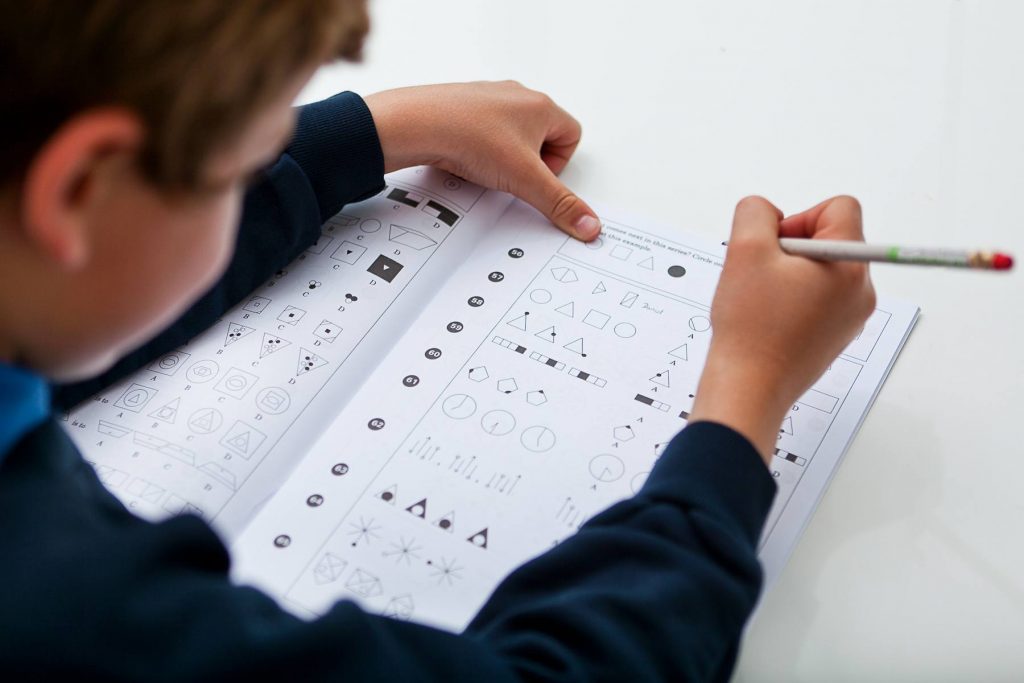
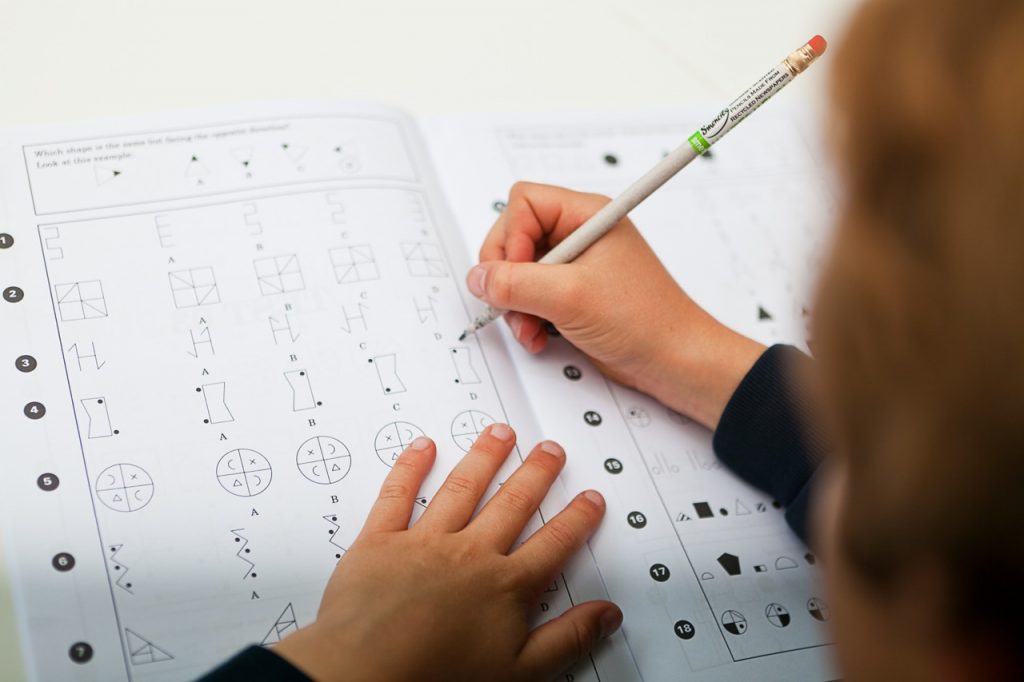
Unlike traditional subjects such as English and Mathematics, non-verbal reasoning does not rely on words or numerical calculations. Instead, it tests a student’s ability to identify patterns, sequences, and relationships between shapes, symbols, and diagrams.
The questions are designed to measure logical thinking and spatial awareness, skills that are crucial for problem-solving in various aspects of learning and real life.
Many school entrance exams incorporate non-verbal reasoning to assess a child’s ability to think critically without relying on language skills. This is particularly useful for evaluating students from different educational backgrounds or those with varying levels of proficiency in English. Since these tests rely on visual information, they level the playing field and focus purely on reasoning ability.
Why is Non-Verbal Reasoning Important?
The skills developed through non-verbal reasoning extend far beyond passing an exam. In everyday life, problem-solving, logical thinking, and pattern recognition are essential abilities that help individuals make sense of complex information.
For example, engineers, architects, and designers frequently use spatial reasoning to visualise structures before creating them. Similarly, scientists and mathematicians rely on pattern recognition to analyse data and form conclusions.
For students, non-verbal reasoning sharpens their ability to think quickly and identify logical relationships. It can also improve performance in subjects like Mathematics and Science, where understanding sequences and patterns is crucial. Additionally, these skills contribute to cognitive flexibility, allowing children to approach challenges with a more analytical mindset.
Common Types of Non-Verbal Reasoning Questions
There are several different types of non-verbal reasoning questions, each designed to assess a specific aspect of logical thinking. Some of the most common include:
Pattern and Sequence Recognition
These questions require students to identify the next shape or symbol in a sequence by recognising changes in size, shading, or orientation.
Shape Analogies
Here, students must determine how one shape relates to another and apply the same relationship to a new set of shapes.
Spatial Awareness and Rotation
These questions assess the ability to mentally manipulate shapes, determining how they would look when rotated or flipped.
Codes and Matrices
These involve understanding relationships between different symbols in a grid and identifying the missing piece based on established patterns.
GL vs CEM Non-Verbal Reasoning Differences
GL Assessment and CEM were historically the two main 11 Plus test providers, but their approaches to non-verbal reasoning and the wider exam differed. GL papers tended to use more clearly defined question types and sections, which made it easier for children to become familiar with recurring formats through targeted practice.
CEM papers were designed differently, often mixing question types within sections, placing greater emphasis on vocabulary and comprehension, and using tighter timings. The CEM approach was also intended to make the test more resistant to intensive coaching, so preparation tended to focus less on memorising a predictable format and more on developing broad reasoning, vocabulary and problem-solving skills.
That distinction became largely historical after CEM withdrew from providing paper-based 11 Plus entrance tests following the 2022 testing cycle. Many grammar schools and selective areas that had previously used CEM subsequently moved to GL Assessment for the 2023 to 2024 admissions round.
As a result, parents comparing GL vs CEM 11 Plus papers were often comparing a current test format with one that had largely disappeared from grammar-school entrance testing. Older books and resources labelled as “CEM practice” could still contain useful reasoning exercises, but they did not necessarily reflect the format a child would actually face.
Parents therefore needed to check the admissions information published by their chosen school or local authority rather than assuming that older GL or CEM guidance still applied, as arrangements varied between areas and sometimes between individual schools.
NVR Practice Questions with Answers and Explanations
To improve in 11 plus non-verbal reasoning questions, students need exposure to real question formats with clear explanations of how the pattern works. The goal isn’t just to get the answer right, but to understand how to break the question down logically.
Example 1: Pattern Question (Rotation)
Question
Look at the sequence of shapes below:
1st shape: ▲ (triangle pointing up)
2nd shape: ▶ (triangle pointing right)
3rd shape: ▼ (triangle pointing down)
4th shape: ◀ (triangle pointing left)
What is the next shape in the sequence?
A. ▶
B. ▲
C. ▼
D. ◀
Answer: B. ▲
Explanation
This is a rotation pattern. The triangle rotates 90 degrees clockwise at each step.
- Up → Right → Down → Left → Up
Once the full rotation cycle completes, it returns to the starting position. The key here is recognising consistent directional movement rather than focusing on the shape itself. Students who don’t track direction often guess incorrectly because all shapes look identical apart from orientation.
Example 2: Sequence Question (Shape Progression)
Question
Look at the sequence:
1st shape: Triangle (3 sides)
2nd shape: Square (4 sides)
3rd shape: Pentagon (5 sides)
4th shape: Hexagon (6 sides)
What comes next?
A. Pentagon
B. Heptagon
C. Octagon
D. Square
Answer: B. Heptagon
Explanation
This sequence increases the number of sides by one each step:
- 3 → 4 → 5 → 6 → 7
The next shape must have 7 sides, which is a heptagon. The challenge here is recognising numerical progression within shapes rather than visual similarity. Students sometimes overcomplicate these questions by looking for changes in size or shading when the rule is purely structural.
Example 3: Odd One Out (Symmetry)
Question
Which shape is the odd one out?
A. A square divided into two equal vertical halves
B. A circle divided into two equal horizontal halves
C. A triangle with one vertical line down the middle
D. A rectangle divided into two equal diagonal halves
E. A square divided into two equal horizontal halves
Answer: D. Rectangle divided diagonally
Explanation
All shapes except one have line symmetry along a vertical or horizontal axis.
- A, B, C, and E all maintain clear symmetry when folded vertically or horizontally
- D only has diagonal division, which does not produce the same type of symmetry
The key here is identifying the common rule first before looking for the exception. Students who try to find the “different” shape immediately often miss the shared property.
Example 4: Pattern Question (Shading and Position)
Question
A grid shows a circle moving from left to right while alternating between filled and unfilled:
1st: ● ○ ○
2nd: ○ ● ○
3rd: ○ ○ ●
What is the next pattern?
A. ● ○ ○
B. ○ ● ○
C. ○ ○ ●
D. ● ● ○
Answer: A. ● ○ ○
Explanation
Two patterns are happening at the same time:
- The filled circle moves one position to the right each step
- Once it reaches the end, it resets to the beginning
This creates a looping sequence. Students often miss this because they track only position or only shading, not both together.
Example 5: Sequence Question (Rotation + Shape Change)
Question
A shape rotates 90 degrees clockwise while also adding one line each step.
Step 1: Square
Step 2: Square with one diagonal line
Step 3: Square with two diagonal lines
What comes next?
A. Square with three lines
B. Triangle with two lines
C. Square with one line
D. Square with four lines
Answer: A. Square with three lines
Explanation
There are two rules working together:
- The number of internal lines increases by one each step
- The shape maintains its structure while evolving internally
Students who only track rotation or only track line changes will miss the full pattern. This type of question tests whether you can manage multiple transformations at once.
Example 6: Pattern Question (Rotation + Shading)
Question
A square rotates 90 degrees clockwise in each step. At the same time, one corner is shaded and moves with the rotation.
Step 1: Top-left corner shaded
Step 2: Top-right corner shaded
Step 3: Bottom-right corner shaded
Step 4: Bottom-left corner shaded
What comes next?
A. Top-left shaded
B. Top-right shaded
C. Bottom-right shaded
D. Bottom-left shaded
Answer: A. Top-left shaded
Explanation
The square completes a full rotation cycle after four steps. The shaded corner moves with the rotation, so once the cycle completes, it returns to the original position. Students often miss that the shading follows the rotation rather than moving independently.
Example 7: Sequence Question (Alternating Pattern)
Question
A sequence alternates between two shapes:
Circle → Triangle → Circle → Triangle → Circle → ?
A. Circle
B. Triangle
C. Square
D. Pentagon
Answer: B. Triangle
Explanation
This is a simple alternating pattern. The sequence repeats every two steps. The key is recognising repetition rather than searching for progression or transformation.
Example 8: Odd One Out (Rotation Consistency)
Question
Which shape is the odd one out?
A. Square rotated 90 degrees
B. Triangle rotated 90 degrees
C. Rectangle rotated 90 degrees
D. Circle rotated 90 degrees
E. Pentagon rotated 90 degrees
Answer: D. Circle
Explanation
All shapes except the circle visibly change when rotated. A circle looks the same regardless of rotation, so it does not follow the same rule. This question tests understanding of shape properties, not just movement.
Example 9: Pattern Question (Number of Shapes)
Question
A sequence increases the number of circles in each step:
1st: ●
2nd: ●●
3rd: ●●●
4th: ●●●●
What comes next?
A. ●●●
B. ●●●●●
C. ●●
D. ●●●●●●
Answer: B. ●●●●●
Explanation
Each step adds one circle. This is a simple numerical progression. Students sometimes overcomplicate these by looking for visual transformations instead of counting.
Example 10: Sequence Question (Position Shift)
Question
A triangle moves one position to the right in each step across three boxes:
Step 1: ▲ _ _
Step 2: _ ▲ _
Step 3: _ _ ▲
What comes next?
A. ▲ _ _
B. _ ▲ _
C. _ _ ▲
D. ▲ ▲ _
Answer: A. ▲ _ _
Explanation
Once the triangle reaches the end, it loops back to the starting position. This is a cyclical pattern. Students often expect linear continuation and miss the reset.
Example 11: Odd One Out (Number of Sides)
Question
Which shape is the odd one out?
A. Triangle
B. Square
C. Pentagon
D. Hexagon
E. Circle
Answer: E. Circle
Explanation
All shapes except the circle have straight sides. The circle has no sides, making it fundamentally different. This tests classification rather than pattern continuation.
Example 12: Pattern Question (Mirror Reflection)
Question
A shape is reflected across a vertical line in each step.
Step 1: Shape facing right
Step 2: Shape facing left
Step 3: Shape facing right
What comes next?
A. Facing right
B. Facing left
C. Rotated upside down
D. Disappears
Answer: B. Facing left
Explanation
This is a reflection pattern, not rotation. The shape flips horizontally each time. Students often confuse reflection with rotation, which leads to incorrect answers.
Example 13: Sequence Question (Size Change)
Question
A square increases in size with each step.
Small → Medium → Large → ?
A. Small
B. Medium
C. Extra Large
D. Triangle
Answer: C. Extra Large
Explanation
This is a size progression. Each step increases scale. The key is recognising consistent growth rather than shape change.
Example 14: Pattern Question (Combined Rules)
Question
A circle rotates while changing colour:
Step 1: Red circle facing up
Step 2: Blue circle facing right
Step 3: Red circle facing down
Step 4: Blue circle facing left
What comes next?
A. Red circle facing up
B. Blue circle facing up
C. Red circle facing right
D. Blue circle facing down
Answer: A. Red circle facing up
Explanation
Two rules are happening:
- Colour alternates: Red → Blue → Red → Blue → Red
- Rotation follows 90-degree clockwise movement
After completing the cycle, both reset to the starting position. This tests the ability to track multiple variables at once.
Example 15: Odd One Out (Internal Pattern)
Question
Which shape is the odd one out?
A. Square with one diagonal line
B. Square with two diagonal lines
C. Square with three diagonal lines
D. Square with four diagonal lines
E. Square with no lines
Answer: E. Square with no lines
Explanation
All shapes except one contain internal diagonal lines. The last option breaks the pattern entirely. This tests whether students identify the shared internal structure before selecting the exception.
How to Prepare Effectively

Preparation for non-verbal reasoning requires a combination of practice, strategy, and a positive mindset. Since these questions do not rely on prior knowledge, students must develop a familiarity with common patterns and problem-solving techniques. The best way to achieve this is through regular exposure to practice papers and question types.
Encouraging students to engage in puzzles, logic games, and spatial challenges can also enhance their skills. Activities such as jigsaw puzzles, tangrams, and Sudoku naturally develop pattern recognition and problem-solving abilities in an enjoyable way.
Additionally, working with past papers under timed conditions can improve speed and accuracy, ensuring students become comfortable with the format of the exam.
Parents can play a crucial role in their child’s preparation by creating a supportive learning environment. Rather than focusing solely on getting answers right, it is important to encourage logical thinking and perseverance. Discussing strategies and working through problems together can build confidence and reduce anxiety around the subject.
How to Improve Non-Verbal Reasoning 11+

Improving non-verbal reasoning for the 11+ exam is crucial for success. Here are top tips to enhance your child’s non-verbal reasoning proficiency:
Understand Question Types
Familiarise your child with different types of non-verbal reasoning questions. Examples are odd one-out shapes, sequences, folding shapes, rotating anti-clockwise, matching two-shapes, and code-breaking tests. This helps a child prepare and fully understand what is expected.
Know the Exam Boards
Different exam boards may have varying formats and question types. Make sure your child practices with materials specific to the exam board by which they will be tested. Understanding the unique question styles of a particular exam board can help them be better prepared.
Use Visual Aids and Puzzles
Engage your child with visual puzzles like jigsaw puzzles, tangrams, and even physical objects. These activities improve spatial reasoning and allow for easily finding similarities and differences between shapes.
Visual aids can also make abstract concepts more concrete and easier to grasp and are excellent tools to reinforce learning and make it more engaging.
Drill on Spatial Awareness
Activities that involve spatial or dimensional awareness, such as building models or playing with construction toys, can significantly enhance the aptitude of a child to visualise and manipulate shapes.
Constructing models can help them understand how different shapes fit together, which is crucial for non-verbal reasoning tests.
Teach Pattern Recognition
Help your child identify and understand the pattern in everyday objects. This can include looking at tile designs, wallpaper patterns, or even nature.
For example, examining the symmetry in leaves or the repetitive arrangement of tiles can sharpen their mind to recognise shapes and patterns, which is a key skill in non-verbal reasoning.
Develop Problem-Solving Strategies
Train your child with different strategies to approach and solve problems, such as breaking down complex shapes into simpler parts.
Showing them how to deconstruct a larger shape into smaller, manageable sections can help them find the answer more efficiently during the test.
Encourage Logical Thinking
Help your child develop logical thinking by solving puzzles and riddles together. This will strengthen their capability to approach non-verbal reasoning questions methodically.
For example, working on a complex shape puzzle together can help them approach problems step-by-step, ensuring they arrive at the correct answer.
Focus on Weak Areas
Identify your child’s weak areas through their practice results and concentrate on improving those specific skills. This targeted approach can yield significant improvements. If, for example, they struggle with folding shapes, dedicate more study time to that area to improve their confidence.
Practice Regularly
Consistent practice with non-verbal reasoning papers and sample questions is essential. This helps children become familiar with various question types they might encounter. Regular training also enables them to identify the right answer quickly, which is vital during the exam.
Timed Practice Sessions
Conduct timed practice sessions to simulate exam conditions. This helps children manage their time effectively during the actual exam. Setting a timer while they work on a set of non-verbal reasoning questions can help them gauge how quickly they need to find the correct answer.
Do Mock Tests
Use mock exams to assess your child’s progress. Mock tests provide a realistic experience and help identify areas needing improvement. They can also highlight which types of questions are most challenging, allowing for targeted practice.
Review and Reflect
After completing practice papers, review the answers with your child. Discuss why certain answers are correct and where they went wrong to reinforce learning. For example, examine why a particular shape fits in a sequence, helping them understand the logic behind the answer and avoid similar mistakes in the future.
Take Advantage of Online Tools
Numerous online tools and apps are designed to improve 11 Plus core skills, including non-verbal reasoning. These interactive platforms can make learning more engaging. This includes apps that offer a variety of shape-based puzzles and provide a fun way to train and improve.
Use a Variety of Resources
To provide a well-rounded preparation, use a mix of practice papers, mock exams, and interactive online resources. This variety ensures that your child is exposed to various exam boards’ different question formats and styles. Also, using both physical test papers and digital puzzles can keep study sessions diverse and engaging.
Incorporate Fun Activities
Use games like chess or video games that require strategic thinking and problem-solving. These can improve the potential to process visual information and think critically. Additionally, such games can enhance concentration and foster a love for learning.
Common Mistakes in 11 Plus NVR
Jumping to Conclusions Too Early
One of the most common mistakes students make is deciding on a pattern too quickly. NVR questions are often designed with multiple possible patterns, especially in the early stages of analysis.
The first pattern a student notices can feel convincing, but it isn’t always the correct one. When a student commits too early, they stop checking other variables, which leads to avoidable errors.
A stronger approach is to test the pattern across all elements before confirming it. This ensures the rule is consistent rather than coincidental.
Focusing on Only One Variable
Another frequent issue is narrowing attention too much. A student might correctly identify that a shape is rotating, but fail to notice that its shading or position is also changing at the same time.
Many 11 plus non-verbal reasoning questions rely on layered transformations, where more than one rule is applied simultaneously. Missing even one variable can lead to the wrong answer, even if part of the logic is correct.
Stronger students train themselves to check multiple variables systematically rather than stopping at the first pattern they recognise.
Inconsistent Approach to Questions
An inconsistent method is a major barrier to improvement. Some students approach each question differently, depending on what stands out visually in the moment. This leads to unpredictable performance, where correct answers are mixed with avoidable mistakes.
Without a structured process, it becomes difficult to build accuracy or confidence over time. A consistent framework ensures that every question is approached in the same logical way, reducing the chances of missing key details.
Overcomplicating Simple Patterns
There’s also a tendency to assume that every NVR question must involve multiple complex rules. In reality, many questions are based on a single, straightforward pattern.
When students overthink these, they start looking for additional transformations that don’t exist, which creates confusion and wastes time.
Developing the ability to recognise when a pattern is simple versus when it is layered is an important skill. It allows students to solve easier questions quickly and reserve more time for complex ones.
Summary
Non-verbal reasoning is a key component of many school entrance exams, and while it may appear challenging at first, it is a skill that can be developed with practice and patience.
By understanding the logic behind these questions and applying effective preparation strategies, students can improve their reasoning abilities and perform well in exams. More importantly, these skills will serve them well in various aspects of learning and problem-solving throughout their academic journey and beyond.
For parents, supporting and encouraging children in their preparation can make a significant difference. A positive and structured approach will not only enhance their ability to tackle non-verbal reasoning questions but also build resilience and confidence in facing new challenges.