


Moving from the Singapore education system to the UK education system can feel overwhelming, especially when you first encounter the 11+ examination. Unlike Singapore’s centrally administered school admissions process, entry into selective UK schools involves different exams, application deadlines, and admission policies depending on each school.
If your family is relocating to the UK, considering a British boarding school, or simply exploring international education opportunities, understanding how the 11+ process works is one of the most important early steps. Starting preparation at the right time can make the application process significantly smoother and provide your child with more options.
This article explains everything Singapore-based families need to know about the 11+ exam, including eligibility, school choices, timelines, preparation strategies, and the unique considerations involved when applying from overseas.

What Is the 11+ Exam and Why Does It Matter for International Students?
The 11+ exam is an entrance assessment used by many selective schools in England to determine admission into Year 7, when pupils are typically 11 years old.
Unlike a national examination, there isn’t one single version of the 11+. Each school or local authority may use different exam providers, question formats, scoring methods, and admission criteria.
The examination is commonly used by grammar schools, independent (private) schools, and some academically selective boarding schools.
For international applicants from Singapore, the 11+ often becomes one part of a broader admissions process that may also include:
- School application forms
- Academic reports
- Teacher references
- Interviews
- English proficiency assessments
- School-specific entrance examinations
Rather than viewing the 11+ as a standalone test, it helps to think of it as one component of an overall admissions profile.
Can Singapore Students Take the 11+ Exam?
Yes. Singapore students can absolutely take the 11+ exam.
Many UK schools actively recruit international students, including applicants from Singapore. Families apply for a variety of reasons, including relocation, long-term education planning, access to prestigious boarding schools, or preparation for future university study in the UK.
The exact admissions process depends on the school. Some schools allow international candidates to sit entrance examinations overseas through approved testing centres or partner schools. Others require applicants to travel to the UK for testing. Some independent schools offer online assessments or supervised remote examinations.
Because procedures vary significantly, parents should check each school’s admissions policy well before application deadlines. Starting enquiries 18 to 24 months before entry provides enough time to arrange testing, gather supporting documents, and prepare for interviews if required.
Understanding the Different Types of UK Schools
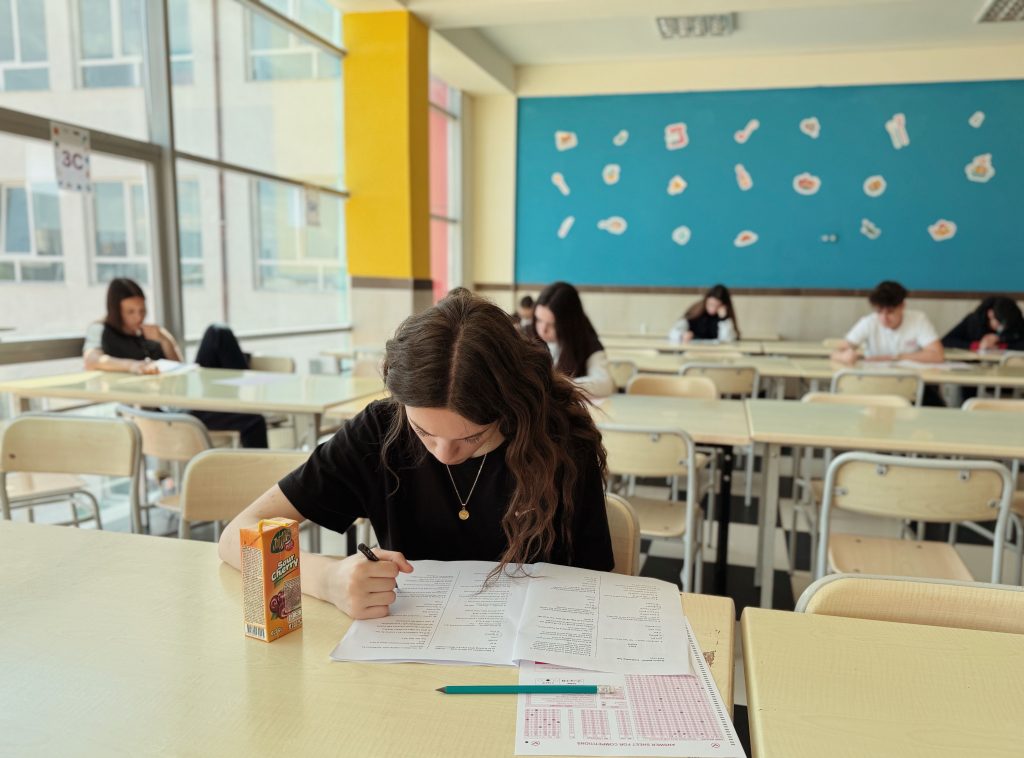
One of the biggest differences for Singapore families is understanding the UK’s school system.
Grammar Schools
Grammar schools are state-funded schools that select pupils based on academic performance. Education is free for eligible UK residents, although international families may only qualify under specific residency or immigration circumstances.
Grammar schools usually rely heavily on 11+ examination performance, with admission becoming increasingly competitive in areas where demand is high. Each local authority sets its own admissions policies, and exam formats may differ.
Independent Schools
Independent schools charge tuition fees and manage their own admissions. Most use their own entrance assessments rather than relying solely on local authority grammar school examinations.
Independent schools often take a broader view of applicants, considering academic ability alongside interviews, school reports, extracurricular interests, and overall suitability.
Many well-known British schools welcoming overseas applicants fall into this category.
Boarding Schools
Boarding schools may be either grammar or independent schools, although most internationally recognised boarding schools are independent.
For Singapore families, boarding schools offer a fully immersive educational experience. Students remain engaged in British education throughout the academic year while benefiting from extensive pastoral care designed to support those living away from home.
Beyond the classroom, weekend activities, sports, music, and enrichment programmes help students develop new interests, build friendships, and settle into school life. Many boarding schools also have dedicated international student services that assist children with adjusting to a new environment, making the transition from Singapore to the UK as smooth as possible.
How to Apply to UK Schools from Singapore
The application process begins much earlier than many families expect. Highly selective schools can receive applications more than two years before entry, so planning ahead gives families more time to compare schools, prepare for entrance assessments, and gather the required documents.
Research Schools Carefully
The first step is identifying schools that genuinely suit your child’s needs rather than simply choosing those with the strongest reputations. Every school has its own academic expectations, teaching style, boarding provision, extracurricular programme, admissions process, and level of support for international students. Even schools that appear similar on paper may have very different cultures.
Spend time reading inspection reports, attending virtual or in-person open days, and speaking directly with admissions staff. These conversations often provide insights that aren’t obvious from prospectuses and can help you decide whether a school is the right fit academically, socially, and personally.
Submit an Initial Enquiry
Once you’ve narrowed your shortlist, contact each school’s admissions office. Most schools encourage overseas families to make enquiries well before formal applications open, particularly if they are applying from Singapore.
Admissions teams can explain which entrance examinations your child needs to sit, whether overseas testing is available, what supporting documents are required, and how interviews are conducted.
They can also clarify boarding availability, scholarships, bursaries, and application deadlines. Establishing contact early makes the rest of the admissions process much smoother.
Register Before Deadlines
Registration deadlines often arrive several months before the entrance examinations themselves, and popular schools may not accept late applications. Missing a registration date could mean postponing your application until the following academic year.
Independent schools usually charge a non-refundable registration fee, while grammar school application procedures vary depending on the local authority. Before submitting an application, make sure you understand every deadline, document requirement, and payment involved.
Complete Entrance Assessments
The assessments your child sits will depend on the schools you’ve chosen. Most applicants complete papers in English and mathematics, while many schools also include verbal reasoning, non-verbal reasoning, or broader cognitive ability assessments. Some independent schools have introduced online adaptive testing for overseas applicants, whereas others continue to use traditional written examinations.
Interviews are also common, particularly at independent schools. These are generally designed to understand how a child thinks, communicates, and approaches learning rather than simply testing academic knowledge.
Receive and Accept Offers
After assessments and interviews have been completed, schools review each application before making admission decisions. Successful applicants may receive an unconditional offer, a conditional offer based on specific requirements, or a place on the waiting list if all places have already been filled.
Families usually need to confirm acceptance within a specified timeframe by signing the school’s acceptance paperwork and paying a deposit to secure the place.
11+ Exam Format and Subjects
Although there’s no single national version of the 11+ exam, most selective schools assess the same core academic skills. Understanding what each subject measures allows students to prepare more effectively and focus on developing exam technique alongside subject knowledge.
English
The English paper assesses much more than spelling and grammar. Students are expected to demonstrate strong reading comprehension by interpreting texts, identifying themes, making inferences, and explaining how authors communicate ideas.
Many schools also include creative writing tasks that assess vocabulary, organisation, imagination, and the ability to write clearly under timed conditions.
Singapore students often have a strong command of English, but they should still become familiar with British spelling, vocabulary, and the style of questions commonly used in UK entrance examinations. Regular reading and consistent writing practice are just as valuable as completing practice papers.
If your child needs additional support, working through dedicated 11+ English resources alongside comprehension exercises and creative writing activities can help build both confidence and exam familiarity.
Mathematics
Mathematics assessments cover the core concepts expected of pupils approaching Year 7, including arithmetic, fractions, decimals, percentages, ratios, algebra, geometry, and multi-step word problems.
The emphasis is often on applying mathematical knowledge to unfamiliar situations rather than simply recalling procedures.
Singapore’s mathematics curriculum gives many students an excellent conceptual foundation, but the wording and structure of UK examination questions can be different. Practising 11+ Maths questions helps students become comfortable with these formats while improving speed, accuracy, and time management.
Verbal Reasoning
Verbal reasoning tests a student’s ability to recognise patterns and relationships within language. Questions often involve analogies, letter sequences, codes, vocabulary, and logical deductions that require careful thinking rather than subject knowledge.
Because these question types receive relatively little emphasis in many Singapore classrooms, students usually improve most through regular exposure and repeated practice.
As they become familiar with common question styles, they begin recognising patterns more quickly and develop greater confidence under timed conditions.
Non-Verbal Reasoning
Non-verbal reasoning focuses on visual and spatial problem-solving instead of language. Students analyse shapes, patterns, rotations, reflections, sequences, and other abstract figures to identify logical relationships between images.
For many children, this is the least familiar part of the 11+ exam. Success depends less on prior academic knowledge and more on recognising recurring visual patterns and applying logical thinking efficiently.
Regular practice with 11+ Non-Verbal Reasoning questions helps students improve both their accuracy and their speed, making this section feel far less intimidating by the time they sit the exam.
Timeline for Overseas Applicants

Families applying from Singapore should begin planning earlier than UK-based applicants. A typical timeline looks like this.
Two Years Before Entry
- Begin researching schools.
- Attend virtual open days.
- Compare boarding options.
- Understand admissions requirements.
Eighteen Months Before Entry
- Create a shortlist.
- Register interest.
- Contact admissions teams.
- Arrange school visits if travelling to the UK.
Twelve to Fifteen Months Before Entry
- Begin structured 11+ preparation.
- Complete diagnostic assessments.
- Identify strengths and weaknesses.
- Develop a realistic study schedule.
Nine to Twelve Months Before Entry
- Register for entrance examinations.
- Book overseas testing arrangements if available.
- Prepare supporting documents.
- Request school reports and references.
Six Months Before Entry
- Complete mock examinations.
- Practise interview techniques.
- Review application materials.
Examination Period
- Sit entrance assessments.
- Attend interviews where required.
- Monitor application updates.
Offer Stage
- Evaluate offers carefully.
- Confirm acceptance before deadlines.
- Arrange visa applications if necessary.
- Organise accommodation and travel plans.
How to Prepare for the 11+ Exam from Singapore
Preparation involves much more than completing practice papers. Students achieve better outcomes when study combines knowledge development, exam familiarity, and consistent review.
Understand the Target Schools
Preparation should reflect the schools your child intends to apply to. Different schools may emphasise different subjects or question styles. Understanding these differences helps avoid studying irrelevant material.
Create a Long-Term Study Plan
Instead of intensive revision immediately before examinations, spread preparation over several months. Weekly study sessions generally produce stronger long-term retention than occasional marathon sessions.
Many families find that four or five shorter sessions each week are more effective than one lengthy weekend lesson. You can support this approach by following a structured 11+ study schedule that gradually increases difficulty while leaving time for revision and mock exams.
Build Exam Technique
Knowledge alone is rarely enough. Students also need to develop:
- Time management
- Reading speed
- Careful checking
- Question prioritisation
- Confidence under timed conditions
Mock examinations play a crucial role here because they simulate real testing environments.
Practise Under Realistic Conditions
Timed practice helps students become comfortable working under pressure. As examinations approach, complete full-length papers without interruptions.
Review mistakes carefully rather than focusing only on scores. Understanding why errors occurred often produces greater improvement than completing additional questions.
Consider Time Zone Differences
If online interviews or remote testing are scheduled according to UK time, families should plan ahead. Practising at similar times of day can help children become accustomed to performing when mentally alert.
Do You Need a Tutor or Can You Self-Study?
There’s no universal answer. Some children achieve excellent results through independent study using high-quality learning materials and consistent support from their parents, while others make faster progress with the guidance of an experienced tutor who understands the admissions requirements of individual UK schools.
Self-study can be an effective option for motivated students who are able to maintain a regular study routine and whose families can provide structure and encouragement throughout the preparation process.
Starting early also makes a significant difference, as it allows children to build their knowledge gradually rather than relying on intensive revision in the months leading up to the exam.
Access to well-designed practice papers, mock exams, and targeted learning resources is equally important, as these help students become familiar with the style and pace of the 11+.
Tutoring may be a better choice when families are applying to several schools with different entrance assessments, or when a child needs additional support in areas such as verbal or non-verbal reasoning.
An experienced tutor can identify weaknesses more quickly, tailor lessons to the schools being targeted, and provide regular feedback that is difficult to replicate through self-study alone.
Tutors can also help students build confidence, particularly if they are unfamiliar with the UK education system or feel anxious about sitting competitive entrance examinations.
For many Singapore families, the most practical solution is a combination of both approaches. Independent study develops consistency and personal responsibility, while occasional tutoring provides expert guidance, answers difficult questions, and ensures preparation stays focused on each school’s specific admissions requirements.
This balanced approach often offers the flexibility needed to prepare effectively without becoming overly dependent on one method.
Common Challenges for Singapore Students
Although Singapore students are often academically strong, the 11+ introduces challenges beyond subject knowledge.
Different Examination Styles
Singapore assessments often prioritise structured curriculum mastery. The 11+ may place greater emphasis on reasoning, inference, and unfamiliar problem-solving. Students therefore need exposure to British-style question formats.
Creative Writing Expectations
Creative writing tasks sometimes differ from what students are accustomed to. Independent schools frequently reward original ideas, strong vocabulary, character development, and narrative structure.
Rather than memorising model essays, students should practise planning and writing under timed conditions.
Interview Preparation
Interviews can feel unfamiliar for younger students. Schools are not looking for rehearsed speeches. Instead, interviewers often assess curiosity, communication skills, confidence, and genuine enthusiasm for learning. Practising conversational responses at home can help children feel more relaxed.
Managing Pressure
International applications often involve school selection, travel planning, relocation decisions, and family expectations. Maintaining a balanced routine with adequate sleep, exercise, and downtime helps prevent burnout during preparation.
Best Resources for 11+ Preparation
Successful preparation usually combines several different resources rather than relying on a single workbook.
Official school admissions pages provide the most accurate information about entrance requirements and deadlines. Practice papers help students become familiar with exam formats, while mock exams develop stamina and confidence.
Reading widely remains one of the best ways to strengthen vocabulary, comprehension, and writing skills. Regular exposure to novels, newspapers, and age-appropriate non-fiction supports several parts of the 11+ simultaneously.
Online learning platforms also make preparation more flexible for overseas families. Interactive lessons, recorded explanations, and progress tracking allow students to study around Singapore school schedules while receiving structured guidance.
Using connected resources rather than isolated practice papers gives students a more rounded understanding of the examination.
Making the Most of the 11+ Exam for Singapore Students
Preparing for the 11+ Exam for Singapore students involves more than studying mathematics or practising English papers. Success depends on understanding the UK admissions system, choosing suitable schools, planning well ahead of application deadlines, and becoming familiar with the specific assessment formats used by each institution.
Families who begin early have more flexibility to research schools, arrange overseas testing, build strong preparation routines, and respond to application deadlines without unnecessary pressure.
Combined with consistent practice, realistic mock exams, and carefully chosen learning resources, a structured approach gives students the confidence to perform at their best and opens the door to a wide range of educational opportunities in the UK.
Frequently Asked Questions
Is the 11+ required for UK boarding schools?
Not always. Some boarding schools use the 11+, while others set their own entrance examinations or assess applicants through interviews, academic records, and school-specific tests.
What age should my child start preparing?
Most families begin structured preparation between 12 and 18 months before the examination. Children who require additional support or are applying to highly competitive schools may benefit from starting earlier.
Can the 11+ exam be taken online?
Some independent schools allow supervised online assessments for international applicants. Others require in-person testing either at the school or at approved overseas examination centres. Always check the admissions requirements for each school.
Does Singapore’s curriculum prepare students well for the 11+?
Singapore students often have a strong foundation in mathematics and English, which can be an advantage. However, many will still need targeted preparation for verbal reasoning, non-verbal reasoning, creative writing, and UK-specific exam techniques.
How many schools can we apply to?
There is no universal limit for independent schools, and families often apply to several schools simultaneously. Grammar school applications follow local authority rules, so the number of choices may depend on where you intend to live in the UK.