


The 11 Plus tests more than a child's knowledge of maths, English, verbal reasoning and non-verbal reasoning. Depending on the school and test format, children may also need to answer a substantial number of questions within tightly controlled sections.
Knowing how to solve a problem is only part of the challenge. They must be able to recognise the question type, choose an efficient method and produce an accurate answer quickly enough.
This is where timed practice tests for 11 Plus preparation become particularly useful. They recreate an important part of the real exam experience: working against the clock.
Timing shouldn't dominate preparation from the beginning. Children normally need to understand the material and develop reliable methods before speed becomes a priority. Once those foundations are secure, however, timed practice can turn subject knowledge into exam-ready performance.
Why Are Timed Practice Tests Important for the 11 Plus?
Timed 11 Plus practice tests help children learn to work accurately within a fixed period rather than simply answering questions correctly when given unlimited time. They can improve pacing, decision-making, concentration, exam technique and familiarity with time pressure.
That distinction matters because an untimed score doesn't always show how a child will perform under exam conditions. A pupil might answer almost every maths question correctly when allowed to work at their own pace but leave several questions unfinished when completing the same material against the clock.
Timed tests expose that gap. More importantly, they provide opportunities to close it before exam day.
Timed Practice Develops Better Time Management
Time management is one of the clearest benefits of timed practice tests for 11 Plus preparation. Children need to learn that exam time is a limited resource and that spending too long on one difficult question can affect their performance across an entire section.
This skill isn't simply about working faster. Good pacing involves deciding how much time a question deserves.
Children Develop a Better Sense of Exam Pace
Young pupils don't naturally have an accurate sense of how long a minute feels when they're concentrating. A child may believe they've spent only a short time on a difficult question when several minutes have actually passed.
Regular timed practice helps recalibrate that perception.
After completing several papers or timed sections, children begin to recognise what an appropriate working pace feels like. They become more aware of whether they're progressing steadily or getting stuck.
This awareness can eventually reduce the need to check the clock constantly. Instead of treating time as an interruption, pupils learn to incorporate it into their exam technique.
They Learn When to Move On
One difficult question can become disproportionately expensive in a timed exam.
Suppose a child spends four minutes trying to solve a single challenging problem. Even if they eventually get it right, those four minutes may prevent them from attempting several easier questions later in the section.
Timed practice teaches an important strategic lesson: not every question deserves unlimited attention.
Depending on the rules and format of the particular test, moving on and returning later may be more productive than continuing to struggle. Children can practise recognising when they're making progress and when they're simply repeating an unsuccessful approach.
Parents should check the current admissions and familiarisation information provided by the relevant school or testing authority, as exam structures and procedures can differ.
Timed Tests Reveal Problems That Untimed Practice Can Hide
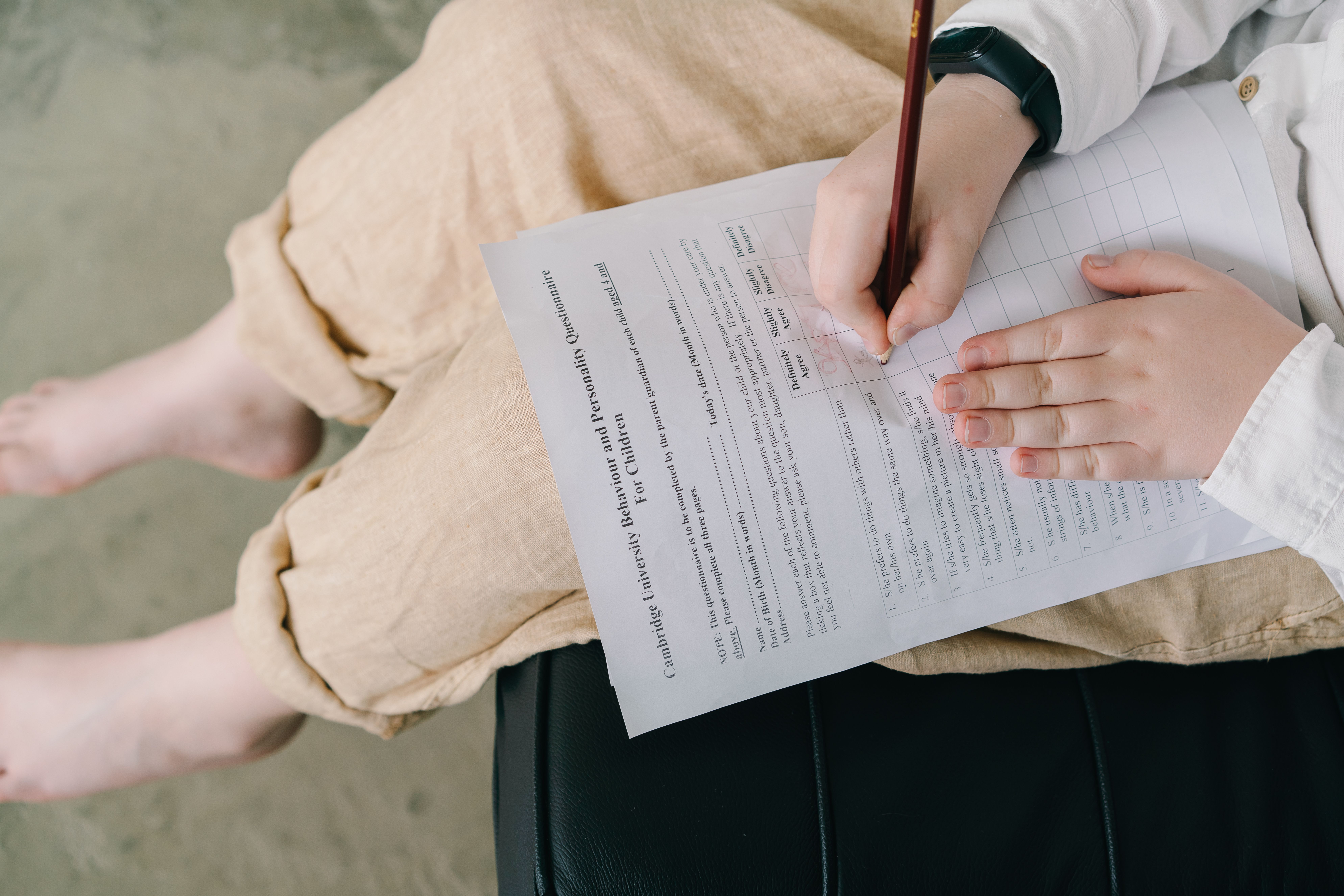
Untimed practice remains valuable because it allows children to learn new concepts without unnecessary pressure. However, it can conceal weaknesses that only become apparent when time is restricted.
A child may understand a topic perfectly well but use an inefficient method. Another may read passages repeatedly because they haven't developed an effective comprehension strategy. Someone else may perform mental calculations accurately but too slowly for the pace required.
Timed testing makes these patterns easier to identify.
Accuracy Problems Become Easier to Diagnose
A lower timed score doesn't automatically mean that a child needs more subject teaching.
Compare timed and untimed performance before drawing conclusions. If a pupil performs well without a time limit but their accuracy drops substantially under timed conditions, the underlying problem may involve pace, concentration or exam technique rather than knowledge.
Parents and tutors can then provide more targeted support.
For example, a child who repeatedly makes arithmetic mistakes near the end of a timed maths section may be rushing after spending too long on earlier questions. Giving them more worksheets on the same mathematical concepts won't necessarily solve the problem. Improving their pacing may.
Slow Question Types Become Visible
Looking only at the final score can also hide useful information.
When reviewing timed practice, consider where the time went. A child might answer vocabulary questions quickly but lose significant time on longer verbal reasoning problems. They may race through straightforward arithmetic but slow dramatically when faced with multi-step word problems.
Recording these patterns over several sessions helps distinguish occasional difficulty from a consistent bottleneck.
This makes timed practice a diagnostic tool as well as an assessment tool.
Timed Practice Can Improve Speed Without Encouraging Guesswork
Parents sometimes worry that introducing a timer will encourage children to rush. That can happen if speed becomes the only measure of success.
Effective timed practice balances three factors: speed, accuracy and completion.
A child who finishes every question but makes numerous careless mistakes hasn't developed good exam technique. Equally, a child who answers almost everything correctly but completes only part of the paper may need to work more efficiently.
The goal is controlled speed.
Fluency Creates Speed Naturally
The best improvements in speed often come from familiarity rather than consciously trying to work faster.
When children repeatedly encounter common question structures, they spend less time working out what each question is asking. They recognise patterns sooner and can select an appropriate method more quickly.
This is particularly useful in areas such as arithmetic, vocabulary, verbal reasoning and non-verbal reasoning, where familiarity with common formats can reduce processing time.
Timed practice therefore works best alongside focused skills development. If a pupil repeatedly struggles with a particular question type, simply timing more papers is unlikely to fix the weakness. The child should first revisit the method, practise it independently and then test whether they can apply it efficiently under timed conditions.
Practice Under Time Pressure Builds Exam Confidence
Exam confidence doesn't mean feeling completely relaxed. It means knowing what to do even when some pressure is present.
For many children, one of the most unfamiliar features of the 11 Plus is the combination of challenging questions and limited time. If their first serious experience of that combination happens during the actual examination, the clock itself can become distracting.
Timed practice makes the experience more familiar.
A child learns what it feels like to encounter a question they can't immediately solve. They experience reaching the midpoint of a section with questions remaining. They practise recovering after making a mistake rather than dwelling on it.
Those experiences can make the real test environment feel less unfamiliar.
Familiarity Can Reduce Unnecessary Panic
A timer can initially make some children uncomfortable. This isn't necessarily a reason to avoid timed work completely. Instead, timing can be introduced gradually.
Start with short exercises rather than immediately expecting a child to complete a full mock examination. A ten-minute activity, for example, can introduce the idea of working within a limit without making the session overwhelming.
As confidence grows, timed sections can become longer and eventually progress towards full practice papers.
The aim isn't to make children feel pressure repeatedly. It's to make ordinary exam pressure more manageable through familiarity.
Timed Tests Strengthen Concentration and Mental Stamina
A full 11 Plus assessment requires sustained attention. Children must read instructions carefully, process unfamiliar information, perform calculations, evaluate possible answers and maintain accuracy across multiple sections.
That requires mental stamina as well as academic ability.
Short worksheets don't always reproduce this demand. A child who performs extremely well for ten minutes may find it harder to maintain the same level of concentration during a longer assessment.
Timed papers can gradually build this endurance.
Parents may notice that errors cluster towards the end of practice sessions. That pattern can indicate fatigue, loss of concentration or rushed decision-making rather than a subject weakness.
Recognising the pattern allows preparation to become more precise. Children can practise longer sections gradually, while parents can also ensure that preparation remains balanced with rest rather than simply increasing workload.
Timed Practice Makes Progress Easier to Measure
Practice test scores become much more meaningful when the conditions are reasonably consistent.
If one paper takes 45 minutes and another takes 90 minutes, comparing the scores tells you relatively little about exam readiness. Once the same time conditions are applied, patterns become easier to interpret.
However, the total score shouldn't be the only measure.
Track accuracy, completion rate and the types of mistakes being made. For example, a child's score might remain similar across two papers even though their performance has improved. They may have attempted considerably more questions on the second paper while maintaining roughly the same accuracy.
That represents useful progress even if the headline score doesn't immediately show it.
For a fuller picture, combine timed results with targeted topic practice and occasional untimed work.
When Should Children Start Doing Timed 11 Plus Practice?

Timed practice is most useful after children have developed a reasonable understanding of the content and question formats they're likely to encounter.
Introducing strict timing too early can be counterproductive. If a child is still learning how to solve a particular type of problem, adding a countdown may encourage shortcuts, guessing or anxiety before the correct method has become secure.
A better progression moves from understanding to fluency and then to timed application.
Stage 1: Learn Without Significant Time Pressure
When introducing new topics or question types, prioritise understanding.
Children should be able to explain what the question requires and apply an appropriate method. Mistakes at this stage are useful because they reveal misconceptions that can be corrected before they become habits.
Stage 2: Introduce Short Timed Exercises
Once a child can answer a question type reliably, begin adding gentle time limits.
Short timed sets are particularly useful because they isolate individual skills. Instead of completing an entire paper, a child might work through a small group of similar questions within a set period.
This helps build fluency without introducing the mental demands of a full mock test too early.
Stage 3: Complete Timed Sections
The next step is working through complete sections under realistic time limits.
Section practice requires children to manage different levels of difficulty while keeping track of their overall pace. It also begins to develop decision-making about when to continue working and when to move on.
Stage 4: Use Full Timed Practice Papers
Full mock papers become more useful as the exam approaches and once the child has sufficient subject knowledge to benefit from them.
These sessions can replicate several features of the actual assessment, including timing, section order, breaks and restrictions on returning to previous sections where applicable.
Always use current information for the specific schools being targeted. The 11 Plus isn't a single national examination, and formats can vary between grammar schools, regions and admissions arrangements.
How to Use Timed Practice Tests Effectively
Simply setting a timer and completing paper after paper isn't the most productive approach. Much of the learning happens after the test.
A strong practice cycle consists of completing the assessment, analysing performance, addressing weaknesses and then testing again.
Recreate Realistic Conditions
When using a paper as a mock examination, try to follow the relevant test conditions as closely as practical.
Use the correct time limit for that particular practice paper or exam format. Minimise interruptions and avoid giving hints during the test. Children should also practise reading instructions independently rather than relying on a parent to explain what to do.
Realistic practice is valuable because it reduces the number of unfamiliar variables on exam day.
For the closest match, use official or school-recommended familiarisation materials where available and check current admissions information rather than assuming every 11 Plus follows the same structure.
Review More Than Wrong Answers
Test review should answer more than "What did you get wrong?"
Look at unanswered questions, guesses, corrections and questions that consumed excessive time. Ask the child how they approached difficult problems and whether they changed methods midway through.
This can uncover inefficient habits that an answer sheet alone won't reveal.
A correct answer reached through an unnecessarily long process can still be worth reviewing because it may become a timing problem in the real examination.
Separate Knowledge Gaps From Timing Problems
After reviewing the paper, classify mistakes broadly according to their likely cause.
Was the concept misunderstood? Was the question misread? Did the child know the method but make a careless calculation? Did they run out of time? Did they spend too long elsewhere?
The response should depend on the cause.
Knowledge gaps require teaching and targeted practice. Timing problems require pacing work. Careless errors may require better checking habits. Treating every wrong answer as the same type of problem wastes valuable preparation time.
How Often Should Children Complete Timed Practice Tests?
There isn't one ideal frequency for every child. The right amount depends on their preparation stage, confidence, workload and response to testing.
Earlier in preparation, targeted learning and untimed practice will usually deserve more attention than repeated full mocks. As the examination gets closer and core skills become secure, timed sections and full papers can play a larger role.
Quality matters more than volume.
Completing several papers without properly reviewing them can reinforce the same mistakes. One carefully analysed test followed by targeted practice may provide more value than multiple back-to-back mocks.
Children also need time between tests to act on what they've learned. If a timed paper reveals weakness in fractions, vocabulary or a particular reasoning format, the next step should usually be focused practice rather than immediately sitting another complete test.
Common Mistakes When Using Timed 11 Plus Tests
One common mistake is introducing full timed papers before a child is academically ready. Poor scores at this stage may simply reflect material they haven't yet learned, making the result less useful as a measure of exam technique.
Another is focusing excessively on the score. A practice result is information, not the purpose of preparation. The most useful question is what the performance reveals about the child's next learning priority.
Parents should also avoid constantly shortening the time limit in an attempt to make practice harder. The objective isn't to train children to complete an exam faster than necessary. It's to help them perform effectively within realistic conditions.
Finally, don't turn every study session into a test. Children still need opportunities to explore difficult questions slowly, learn new vocabulary, develop mathematical reasoning and correct misunderstandings without watching the clock.
Timed Practice Should Match the Actual 11 Plus Format
The term "11 Plus" covers different admissions tests rather than one identical UK-wide paper. The subjects, question formats, section lengths and timings can vary according to the school, consortium or region.
That makes targeted preparation essential.
Before setting timing goals, check the current admissions information for the schools you're considering. Look for official familiarisation materials, test-provider information and details published for the relevant admissions year.
Practice based on outdated or unrelated test formats can teach the wrong pacing strategy.
Timed and Untimed Practice Work Best Together
Timed practice shouldn't replace untimed learning. The two serve different purposes.
Untimed work allows children to think deeply, experiment with methods and understand why an answer is correct. Timed work tests whether those skills can be accessed efficiently under exam conditions.
Moving between the two creates a productive learning cycle.
If a timed test exposes a weakness, remove the time pressure temporarily and work on the underlying skill. Once the child becomes accurate and confident, reintroduce timing to see whether the improvement transfers to exam conditions.
This approach prevents speed from becoming more important than understanding.
Making Timed Practice Tests Part of Effective 11 Plus Preparation
The benefits of timed practice tests for 11 Plus preparation extend beyond simply teaching children to answer questions faster. Used appropriately, they develop pacing, concentration, decision-making and familiarity with exam pressure while revealing weaknesses that untimed work may not expose.
Their value depends on when and how they're used. Children should first develop secure knowledge and reliable methods, then progress from short timed exercises to sections and realistic mock papers. Each test should also be reviewed carefully so that mistakes lead to specific improvements rather than another round of testing.
Combined with targeted subject practice, current familiarisation materials and plenty of untimed learning, timed practice can help children turn what they know into the controlled, efficient performance required on 11 Plus exam day.